Biography of Gaston Tarry:
 Gaston Tarry (Villefranche de Rouergue 1843 - Le Havre 1913) was born in the Aveyron, a region in the center of France. He studied mathematics at the Lycée Saint-Louis in Paris, and spent his working life in Algeria in the French Financial Administration (Contributions Diverses de l’Administration des Finances). France had invaded Algeria in 1830 and French rule was established by 1847. Tarry was part of the French administration in Algeria, retiring in 1902. Although he was an amateur mathematician, Tarry had an amazing ability to analyse combinatorial problems. His passion for magic squares started when he was in his fifties and meet his friend of Alger, Brutus Portier. Together they investigated mathematically problems and, you guessed it, he discovered also the first 16th-order panmagic square. That will say the first bimagic square of order 16. This started his passion for magic squares. Over time, he wrote a large number of articles in various scientific magazines of the period, where the bimagic squares of order 8 where published when he was back in Paris, year 1903. He was searching after algorithm to solve the squares and the first known trimagic square of order 128 is also credited to Gaston Tarry and it was presented in a French magazine 1905. He called his method of magic square construction the "cabalistic condensator" and wrote:
This condensator is a real magic machine charged at the limit. In discharging it, we will obtain magical effects. The discharge can only stay in a good conductive environment, a magic field.
Tarry also solved Euler's 36 Officer Problem, proving that two orthogonal Latin squares of order 6 does not exist. The problem as stated by Euler is as follows: How can a delegation of six regiments, each of which sends a colonel, a lieutenant-colonel, a major, a captain, a lieutenant, and a sub-lieutenant be arranged in a regular 6 × 6 array such that no row or column duplicates a rank or a regiment? He showed it in two articles in French magazine that such an arrangement is impossible (4k+2).
A panmagic square (pandiagonal magic, also called diabolic) is a square which is magic for all its lines, all its columns, and all its full or broken diagonals (not only the two main diagonals).
Credit: www.multimagie.com
Eiffel Tower
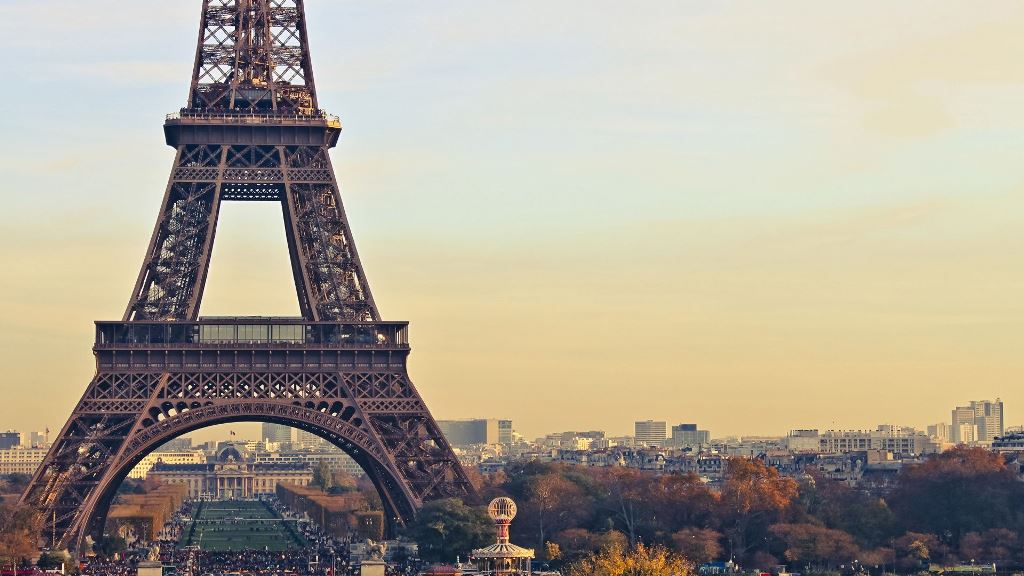
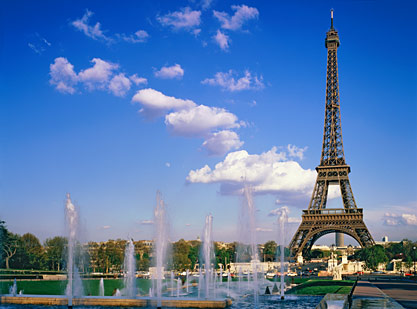 Eiffel Tower, tower in Paris, France, an early example of wrought-iron construction on a gigantic scale. Today the Eiffel Tower is considered one of the world’s most recognizable landmarks. It attracts more than 6 million visitors each year.
The tower was designed and built by the French civil engineer Alexandre-Gustave Eiffel for the Paris Exposition Universelle (World’s Fair) of 1889, a celebration of the centennial of the French Revolution. Constructed in a little more than two years, the tower then stood 312 m (1,024 ft) high. At the time of its completion in 1889, the tower was the tallest structure in the world. It remained the tallest for 40 years, until the 1930 completion of the Chrysler Building in New York City, which was 7 m (22 ft) taller. Today, with its television antenna, the tower measures 324 m (1,063 ft) in height.
The lower section of the tower consists of four immense arched legs set on masonry piers. The legs curve inward until they unite in a single tapered tower. There are three main platforms, each with an observation deck. The first deck is 57 m (187 ft) high, while the second is 116 m (381 ft) off the ground. Both are accessible by stairs or elevator. The third deck, which is 276 m (906 ft) high, is accessible to visitors only by elevator. Restaurants with panoramic views are located on the first and second decks.
Installed near the top of the tower are a weather station (since 1910), a radio transmitting station (since 1918), and a television transmitting antenna (since 1957). Also located near the top of the tower are a suite of rooms originally used by Eiffel as laboratories for his scientific experiments. The laboratories were moved elsewhere in Paris in 1921, and the rooms now house reconstructions of Eiffel’s office and the offices of the tower’s engineers. The tower, constructed of about 7,300 metric tons of iron, includes more than 18,000 pieces held together by 2.5 million rivets. Its open framework design allows it to withstand strong winds. The entire tower is repainted every five years—previously every seven years—a job that takes more than a year and requires about 60 metric tons of paint. The Eiffel Tower underwent a major restoration program from 1980 to 1985.
When work on the Eiffel Tower began, the project received enormous criticism, notably a petition from 300 artists, delivered in 1887, bitterly protesting its construction. From the moment the Exposition Universelle opened in 1889, however, the tower became the principal attraction of the fair. Soon, it became a well-known landmark and a symbol of the city itself.
The tower also provided inspiration for artists and writers. Artist Robert Delaunay, for example, created a series of paintings from 1910 on, using the idiom of cubism, which showed the Eiffel Tower and surrounding buildings from different, dizzying perspectives. Writer Guillaume Apollinaire dedicated a poem to it in 1918; the group of musicians known as Les Six composed a ballet about it in 1921, Les Mariés de la tour Eiffel (The Newlyweds of the Eiffel Tower); and painter Marc Chagall depicted a bride and groom floating over Paris with the tower behind them in Les Mariés de la tour Eiffel (1928, Fukutake Collection, Japan).
Microsoft ® Encarta ® 2009. © 1993-2008 Microsoft Corporation. All rights reserved.